Not every affiliate page needs special funnel software. Learn when a normal WordPress page is enough and when a dedicated landing page builder can make your funnel easier to build, test, and manage.
An affiliate blog does not need specialized software for every page it publishes.
You can write articles, create basic pages, add forms, and build a surprisingly functional website using WordPress itself.
That raises an important question:
When does an affiliate marketer actually need a dedicated landing page builder?
The answer is not “as soon as you start a blog.”
A dedicated affiliate landing page builder becomes useful when the job of the page changes.
A normal blog article is designed primarily to educate, answer questions, and help readers move through your site.
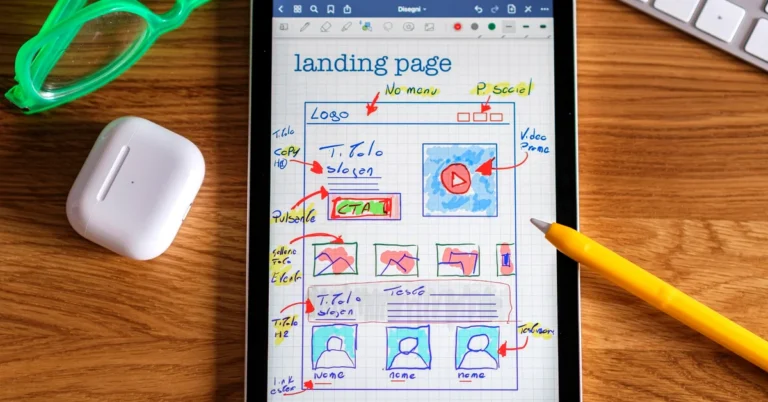
A landing page is usually designed around one specific action.
That action might be joining an email list, registering for training, downloading a lead magnet, or moving toward a specific offer.
Once that focused conversion job becomes important, dedicated landing-page tools can start earning their place in your stack.
Before choosing software, define what the page is supposed to accomplish.
A normal blog post might need:
A landing page may have a much narrower purpose:
When the page has one primary conversion goal, every element should support that goal.
That is where a landing page builder can become useful.
If your site is still young, do not assume another tool is automatically the next thing you need.
A normal WordPress page can be enough when:
WordPress has its own system for creating and managing pages, and the official WordPress documentation on Pages is a useful reference if you are still working with standard site pages.
The principle is simple:
Do not add software merely because the software exists.
Add it when it solves a problem you actually have.
A blog post usually benefits from giving the reader options.
They may follow an internal link, read another article, join your email list, or explore the site.
A landing page often benefits from reducing choices.
If you paid to send a visitor to a page offering a free report, you may not want a dozen unrelated navigation paths competing with that offer.
The narrower the objective, the easier it becomes to evaluate whether the page is working.
If 500 targeted visitors reach a lead-capture page and 50 subscribe, you can calculate the response clearly.
If those same visitors arrive on a homepage with ten different options, it becomes harder to know what they were expected to do.
One of the first situations where a landing page builder can become useful is when you want a page created specifically to collect email subscribers.
The page may contain:
Everything else is secondary.
This is very different from adding a newsletter form to the sidebar of an article.
The visitor arrived at the landing page specifically because the lead magnet or promise interested them.
The need becomes stronger when the funnel extends beyond a single page.
For example:
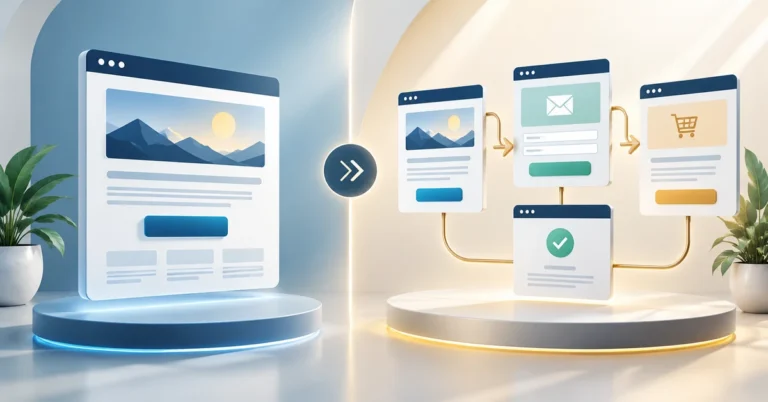
Traffic → opt-in page → thank-you page → email sequence → offer
Now several pieces need to work together.
You may want consistent design, predictable page templates, simple duplication, and an easier way to manage those funnel stages.
A dedicated builder can reduce the amount of manual page construction required each time.
A normal website theme is designed to support the entire website.
A landing page may need a different layout.
You may want:
You can build many of those elements manually.
The question is whether repeatedly doing so is the best use of your time.
Once you are creating several funnel pages, a system designed for those pages can become considerably easier to manage.
Paid traffic raises the standard because every visitor has a direct acquisition cost.
If you spend money to generate clicks, you want the destination to be intentional.
Sending paid traffic to a broad homepage may give visitors too many unrelated choices.
A focused landing page can make the campaign easier to evaluate.
If you are still deciding how traffic should enter your site, see How to Choose a Primary Traffic Source for an Affiliate Blog.
A dedicated landing page builder becomes more valuable when paid traffic is important enough that you want tight control over the visitor’s path.
Repetition is one of the clearest signs that a dedicated system may save time.
Imagine building a new opt-in page every month.
Each time you manually recreate:
If the structure is mostly the same, templates and reusable sections become useful.
The advantage is not simply that the builder can make attractive pages.
The advantage is that you stop rebuilding the same foundation repeatedly.

Different traffic sources may need different messaging.
A visitor coming from a search article may already understand the subject.
A visitor arriving from a paid advertisement may need more context.
A Pinterest visitor may respond to a visual promise.
A referral partner may send people who already know what they are looking for.
You may eventually want different landing pages for those audiences.
A dedicated builder makes it easier to duplicate a working structure and change the message without rebuilding everything from scratch.
There is a point where you are no longer experimenting with one page.
You have:
At that point, organization becomes a legitimate concern.
A tool designed around landing pages and funnels can give the system more structure.
This is often when specialized software becomes less of a luxury and more of a workflow tool.
No.
This is an important distinction.
Your normal blog content should usually stay inside the normal publishing system unless you have a specific reason to change it.
Using special funnel software for every article would add unnecessary complexity.
Your blog posts already have a different job.
The landing page builder should support the pages that actually benefit from focused conversion design.
A landing page builder cannot rescue a weak message.
It can make page construction easier.
It cannot automatically determine:
The tool gives you a framework.
The marketing decision still belongs to you.
A landing page often performs best when its calls to action support the same goal.
That does not necessarily mean there can be only one button.
You might repeat the same CTA several times down a longer page.
The important distinction is that those buttons are usually pointing toward the same action rather than asking the visitor to choose between unrelated outcomes.
If you need help thinking through CTA quantity and placement, read How Many Calls to Action Should an Affiliate Blog Post Have?.
A beautiful landing page is still only one part of the funnel.
You need to know what happens after visitors arrive.
Depending on the campaign, useful measurements may include:
That is why your page-building system and your measurement system need to support each other.
For a broader tracking framework, see Which Affiliate Marketing Metrics Should You Review Every Week?.
One tool worth considering when you reach this stage is OptimizePress.
OptimizePress is designed around WordPress landing pages, funnels, opt-in pages, and related conversion-focused pages.
I would not recommend adding it simply because you own a WordPress site.
I would consider it when you are deliberately building conversion pages often enough that a dedicated system starts saving time and reducing friction.
If you want to take a closer look, you can review OptimizePress here:
Disclosure: The OptimizePress link above is an affiliate link. Partner to Wealth may earn a commission if you purchase through it.
Whether you use OptimizePress or another solution, evaluate the tool based on the work you actually need to do.
Useful questions include:
A feature list is less important than whether the tool improves your actual workflow.
This is one of the easiest traps in online marketing.
You are unsure what funnel to build.
So you buy a funnel tool.
You are unsure what email to send.
So you buy an email tool.
You are unsure how to get traffic.
So you buy a traffic tool.
Software can make implementation easier.
It cannot make the underlying strategy decision for you.
First decide:
Who is this page for, and what should they do next?
Then choose the simplest tool capable of building that experience.
Every tool adds something to manage.
There may be:
That is why “more software” should never be the goal.
A new tool should reduce more complexity than it creates.
If it does not, the normal WordPress setup may still be the better choice.
You may be better off staying with a standard WordPress page when:
There is no business advantage in replacing something that already works merely to make the technology look more sophisticated.
A dedicated landing page builder becomes easier to justify when several of these are true:
At that point, the software is solving a repeatable business problem.

If you are unsure whether you need a dedicated builder, start with the simplest working version of the funnel.
For example:
Traffic → basic opt-in page → thank-you page → email sequence
Get that path working.
Confirm the forms submit properly.
Confirm the subscriber receives the promised resource.
Confirm your email automation starts.
Confirm the links work.
Then ask what is genuinely difficult about maintaining or improving the system.
Your answer will tell you far more about whether you need specialized software than a feature comparison ever could.
An affiliate blog needs a dedicated landing page builder when focused conversion pages become important enough that building and managing them manually starts creating unnecessary friction.
You do not need one simply because you are an affiliate marketer.
Start with the job the page needs to perform.
Use the simplest system that can perform that job reliably.
Then upgrade when your traffic, funnels, testing, and page-building workload create a real reason to do so.
If you have reached that stage and want a WordPress-focused option designed for landing pages and funnels, you can take a closer look at OptimizePress here.
And if you are still building the broader foundation of your affiliate business, you can also get the free Never Succeed Online report.
Subscribe to get the latest posts sent to your email.
If you found this guide helpful, please tap the Like button and share it with someone who could benefit. Every Like and Share helps more people discover Partner to Wealth.